

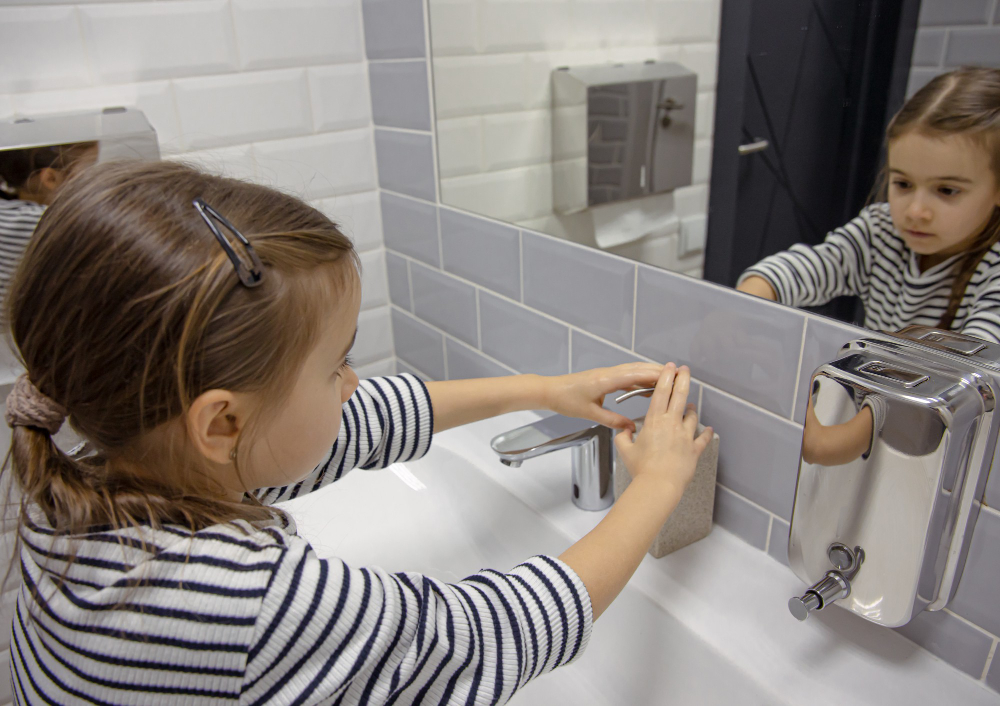
When parents drop their children off at a daycare or early learning center, they are doing so with an immense amount of implicit trust. They trust that the facility is secure, that the staff is properly vetted, and that the environment is completely safe for a developing child. While administrators go to great lengths to childproof rooms, sanitize toys, and secure entrances, one of the most critical safety factors is entirely invisible to the naked eye: the quality of the drinking water.
Lead and heavy metal contamination in tap water poses a severe and irreversible threat to young children. Because their bodies and brains are still in crucial stages of development, infants and toddlers absorb lead at a significantly higher rate than adults. Even trace amounts of exposure can lead to lifelong cognitive deficits, developmental delays, and behavioral issues. Because of this high-stakes reality, environmental agencies and state governments have established strict mandates regarding water quality in childcare facilities. But for daycare administrators and facility managers, a vital question remains: how often should you actually be testing your tap water to ensure true safety, rather than just basic legal compliance?
The Regulatory Baseline: What the State Mandates
In New Jersey and many surrounding states, the push to protect young children from lead exposure has resulted in stringent, formalized testing schedules. Generally speaking, state-funded early childcare facilities, alongside public schools, are mandated to test all drinking and food preparation outlets on a strict three-year cycle. For private and independent licensed child care centers, testing is heavily intertwined with the state licensing process.
Under the current framework overseen by state health and environmental departments, childcare centers are required to submit proof of clean water to obtain their initial operating license. Following that, testing is almost universally required for every license renewal, which typically occurs every three years. These tests must be processed by certified environmental laboratories, and the results must fall below the state’s established action level for lead, often set at 15 parts per billion (ppb), though regulatory shifts are continuously aiming to push that threshold even lower.
Administrators must maintain meticulous records of these results and make them available to state inspectors. If you are operating a facility, adhering to this regulations framework is non-negotiable. It is the absolute minimum standard required to keep your doors open and your license valid. You can monitor updates to these specific mandates directly through resources provided by the NJ DEP, which regularly publishes guidance for schools and early childcare centers.
The Fallacy of the Three-Year Guarantee
While fulfilling your state-mandated three-year testing cycle is necessary, treating it as a permanent guarantee of safety is a dangerous misconception. A laboratory report is a highly specific snapshot in time. A clean bill of health in 2024 tells you exactly what the water quality was on the specific morning the sample was collected. It does not predict what the water chemistry will look like in 2025 or 2026.
Water is a dynamic solvent. Its corrosivity can fluctuate based on municipal treatment changes, seasonal temperature variations, and the source of the water itself. Your building’s plumbing infrastructure is also in a constant state of slow degradation. If you have an older building with copper pipes joined by lead solder, a slight increase in the water’s acidity can suddenly cause that solder to begin leaching lead into the water supply.
If a daycare relies solely on the mandated three-year cycle, a shift in water chemistry or a plumbing failure that occurs shortly after a test could expose children to elevated lead levels for over two and a half years before the next scheduled test catches the problem. For this reason, many environmental professionals strongly advocate for looking beyond the legal minimum and adopting a more proactive stance on facility water health.
Key Triggers That Require Immediate Off-Cycle Testing
Even if you are perfectly aligned with your state’s testing schedule, there are several specific events that should trigger an immediate, off-cycle water test. Failing to retest after these events can instantly invalidate your previous clean results.
The most common trigger is internal plumbing work. If your daycare undergoes renovations, repiping, or even just the replacement of a few older sinks and water fountains, you must retest those specific outlets. It is a common misconception that buying a “lead-free” fixture from a hardware store guarantees safety. By current legal definitions, “lead-free” brass plumbing components can still contain trace fractions of a percent of lead, which can sometimes leach into the water during the initial weeks of use.
External infrastructure changes are just as critical. If your local municipality is conducting heavy street work, replacing water mains in your neighborhood, or changing out the service line that connects your building to the municipal grid, your water quality is at risk. Physical disruptions to aging municipal pipes can shake loose heavy metal particulate, pushing it directly into your facility’s internal plumbing. If you see municipal utility crews digging up the street outside your daycare, it is highly advisable to bring in professionals for targeted testing once the street work is completed.
The Hidden Danger of Water Stagnation
Childcare facilities operate on schedules that inherently create water stagnation risks. Unlike a residential home where water is used somewhat consistently throughout the day and evening, daycares often sit completely dormant overnight, over long holiday weekends, and sometimes over extended seasonal breaks.
When water sits motionless inside pipes for extended periods, it maximizes the contact time between the water and any lead-containing materials in the plumbing system. This is when the highest rate of leaching occurs. The first cup of water drawn from a sink on a Monday morning poses a significantly higher risk than a cup drawn on a Wednesday afternoon. While implementing a rigorous, documented morning flushing protocol is a highly effective mitigation strategy, the only way to verify that your flushing protocols are actually working is through periodic testing. The CDC provides extensive guidance on how stagnation affects lead levels and why routine management of building water systems is vital for protecting vulnerable populations.
Why Professional Collection is Mandatory
When it is time to test your facility’s water, whether for a mandated license renewal or a proactive off-cycle check, the methodology of the collection is just as important as the laboratory analysis itself. State regulations require what is known as a “first-draw” sample.
A first-draw sample mandates that the water must have sat stagnant in the pipes for a minimum of eight hours, but typically no more than forty-eight hours. The sample must be taken from the very first drop of water to exit the fixture. If a well-meaning staff member turns the tap on for even two seconds before placing the collection bottle under the stream, the sample is effectively ruined. The highly concentrated stagnant water will have been flushed down the drain, and the resulting laboratory report will show artificially low, highly inaccurate lead levels.
Because the stakes are so high and the margin for human error is so wide, attempting to handle sampling internally is a massive liability. Partnering with certified environmental specialists who operate across various local locations ensures that your samples are collected with flawless scientific precision. Professional collection guarantees the integrity of the chain of custody, ensuring that your results will be accepted by state licensing boards without question.
The Value of Proactive Communication
Beyond the physical safety of the children, water testing is fundamentally about trust and transparency. In an era where parents are more informed and vigilant about environmental hazards than ever before, a daycare’s approach to water safety can be a defining characteristic of its overall quality.
Do not view water testing merely as a bureaucratic hurdle to clear. Use it as a tool to demonstrate your unwavering commitment to the families you serve. When you conduct testing, especially if you do so more frequently than the law requires, share those results with your parents. Following the communication protocols outlined in the EPA’s drinking water guidelines helps facility managers frame these technical reports in a way that parents can easily understand. Proactive communication reassures parents that you are not just waiting for the state to tell you what to do; you are actively taking control of your facility’s environmental health.
Moving Forward with Confidence
Determining how often a daycare should test its water requires balancing strict state mandates with the practical realities of aging infrastructure and changing water chemistry. While a three-year cycle is the standard legal baseline, true facility safety often requires a more vigilant, proactive approach, especially following plumbing changes or municipal disruptions.
If you are approaching your next license renewal, have recently completed renovations, or simply want the peace of mind that comes with up-to-date data, do not wait for a mandate to force your hand. Review your facility’s plumbing history, assess your current testing schedule, and take action.
Would you like me to help you schedule a consultation with our team so we can review your facility’s unique water profile and set up a compliant, proactive testing plan? Feel free to contact us to ensure your daycare remains a safe, healthy environment for every child in your care.